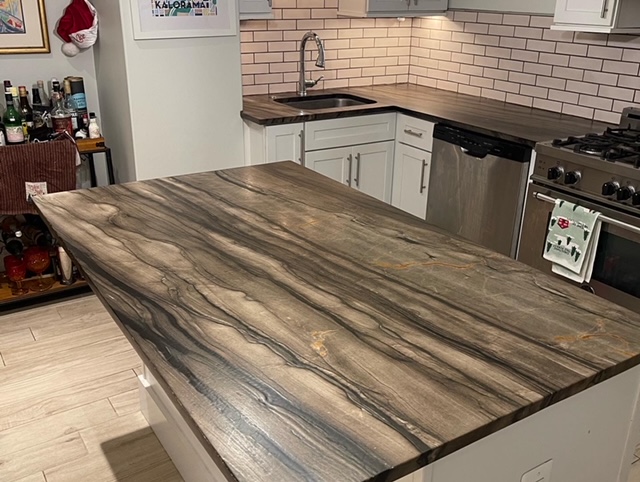
Natural stone can add a certain elegance to any home. It’s chosen for its durability and aesthetic appeal. Marble, limestone, quartzite, and travertine are popular choices for kitchen and bathroom countertops, floors, and showers.
The choice to go with natural stone is a great investment, one that can increase the market value of your residence. With proper maintenance, natural stone will stand the test of time. The key is proper upkeep and safeguarding against unnecessary blemishes and damage through care and consideration.
What is Natural Stone Etching?
Natural stone is porous, which means that these surfaces can absorb liquids. This is how etching can tarnish calcium-based materials like travertine, limestone, marble, and sometimes quartzite. If you notice a hazy or dull appearance on your countertops, floors, or shower, your natural stone is showing evidence of etching. White marks, water rings, and a rough texture are also signs of etching.
You might mistake this for a stain, but it’s not. Etching is a chemical reaction, more like a burn. It is physical damage to the stone, and no amount of trying to wipe it away by conventional methods will remove the tarnish.
What Causes Natural Stone Etch Marks?
So now that you know what etching is, it is important to know what causes it. Acids are the culprit. Substances with a pH balance ranging from 1 to 6.9 chemically react to the calcium carbonate within some natural stone surfaces.
Commonly, this can occur when homeowners use harsh, acidic cleaning products or when your surfaces are exposed to things like tomatoes, vinegar, wine, or lemon juice. These liquids dissolve layers of vulnerable natural stone surfaces on a microscopic level, burning the polished surface in an unsightly manner.
How to Prevent Natural Stone Etching
Avoid the use of caustic cleaning products. Don’t use vinegar and lemon cleaners on marble, travertine, limestone, and quartzite surfaces. Choose cleaners that are pH-neutral. Be mindful of acidic foods, using cutting boards, and wiping things clean before they have a chance to do damage is imperative.
If you spill a glass of wine, don’t let the liquid pool up and sit on your natural stone surfaces for too long. Using coasters can help cut down on exposure to harmful liquids. Additionally, keeping your natural stone surfaces sealed properly can help protect them against damage.
When Should You Contact the Pros About Natural Stone Etch Mark Removal?
Unfortunately, once natural stone has been damaged and etching becomes apparent, it cannot be cleaned conventionally. These burns have already removed the finish, and so they must be addressed professionally. Natural stone care professionals use specific techniques to hone and polish your natural stone surfaces to restore them to their former luster.
Deep etching requires the use of specialized equipment. Stone care works use diamond abrasives to remove damaged layers of stone if the damage is extreme. If necessary, they may resurface the entire area for consistency. They will also reseal the surface once they remove etches and other blemishes. Sealing these surfaces helps safeguard them from future damage.
To learn more about overall care for your natural stone, the Natural Stone Institute provides some helpful tips.
Searching for natural stone etch mark removal in Northern Virginia? NOVA Stone Care has you covered. Our expert stone care technicians have the skills and the expertise to get your natural stone surfaces back to new. Interested in scheduling stone care services to address etching? Contact us to schedule an appointment today!

Comments are closed.